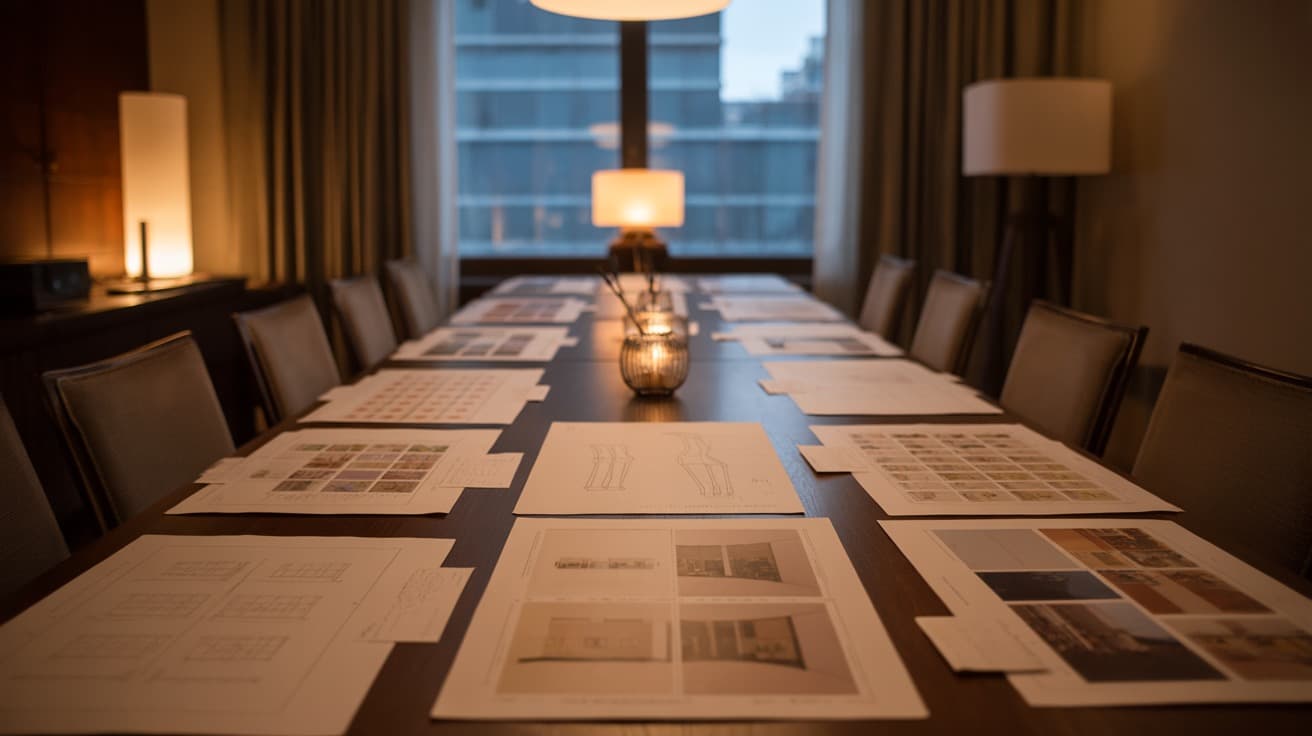
Every hospitality group I’ve worked with keeps a list. It lives in a deck someone built two years ago, in the notes app on a director’s phone, or in the head of one chef who brings it up every December. The ideas on it are good. Some are better than what’s on the menu tonight. And the ones I’d bet on are almost always the ones that would make a regular walk in wondering what you’re going to do next.
What the list is actually waiting on
I’ve run F&B operations north of $55 million and helped feed 40,000 athletes a day at the Paris Olympics, and I have never met a team short on ideas or short on the craft to build them. What they’re short on is a free Tuesday. An operating team is built to run the business tonight: labor, covers, waste, the walk-in that failed at 4am, the banquet for 900 that moved up a day. Inventing against that is a different job on a different clock. The list waits because the team is pointed at service, and that focus is the reason the doors open on time.
What changed is the cost of finding out
For most of my career, the honest answer to “should we build this” was a six-month discovery: a consultant, a test kitchen week, a deck, and a P&L somebody guessed at. At that price, “not now” was the correct call almost every time, and I made that call myself more than once. Applied AI compresses the cycle from months to weeks. You can build a photoreal artifact of the concept, run the operator math against real labor and yield numbers, and pressure-test the premise before anyone commits build capital.
Software doesn’t have taste, and I won’t pretend it does. What it changes is sequencing. The cost of invention always sat downstream of the idea, in learning the idea was wrong: the sample order, the equipment spec, the two-week test that ate a sous chef. Move the learning earlier and make it cheap, and the same team on the same budget gets to be wrong ten times before lunch. Being wrong ten times is how you find the one thing worth putting in front of a guest.
Put a picture in front of a GM
A memo asks people to imagine. A demo makes them react, and the reaction is the data you were after. I’ve watched a room go polite and quiet over a spec document, then argue for forty minutes over one image of a plate they could suddenly see landing on a four-top. Hand a GM a photoreal frame of the thing at Saturday volume and you’ll hear in nine seconds whether it survives service, and you’ll hear exactly why. That argument is worth more than the deck that produced it.
Ten prototypes, nine goodbyes
Here’s the part I want you to press me on. If you can prototype ten concepts in the time it used to take to prototype one, killing things becomes the discipline that matters most. Cheap invention without a kill rule just produces a longer list, which is where we started. So we write the kill criteria before the build: what number, seen by what date, means we walk away without ceremony. Nine quiet goodbyes are the price of the one thing worth rehearsing in front of guests.
Design, build, license, equip
That’s the model in four words. We design the concept, we build it, we license it to the operator, and we equip the floor to run it. Your team runs it in front of guests, which is the only place a concept is ever really tested. We stay asset-light, and on concept lines we take an equity stake rather than a fee-for-service arrangement or a cut of your P&L. The fee funds the build. The equity is the part that compounds, so we only win if the thing still works in month eighteen, not just on opening night.
Our front door is small on purpose
The way in is a $7,500 Friction Audit, and the size of it is deliberate. I’m not interested in selling a program to someone who hasn’t watched us work first. What that week buys you is a straight read on what’s in the way of the oldest idea on your list, and what proving it would actually cost this quarter. Anticipation is the thing a guest will drive across town for, and it gets built on purpose, in a specific order, by someone whose whole job that week is the surprise.
So send us the list. If that’s a bigger move than you want to make on a Monday, take the oldest idea on it instead, the one that’s been sitting so long people have stopped bringing it up, and ask your leadership team one question: what would it cost to find out for real this month instead of next year? Then ask your chef what they’d want to unveil first if the answer came back cheap. That number is almost always smaller than the reason the idea has been waiting.