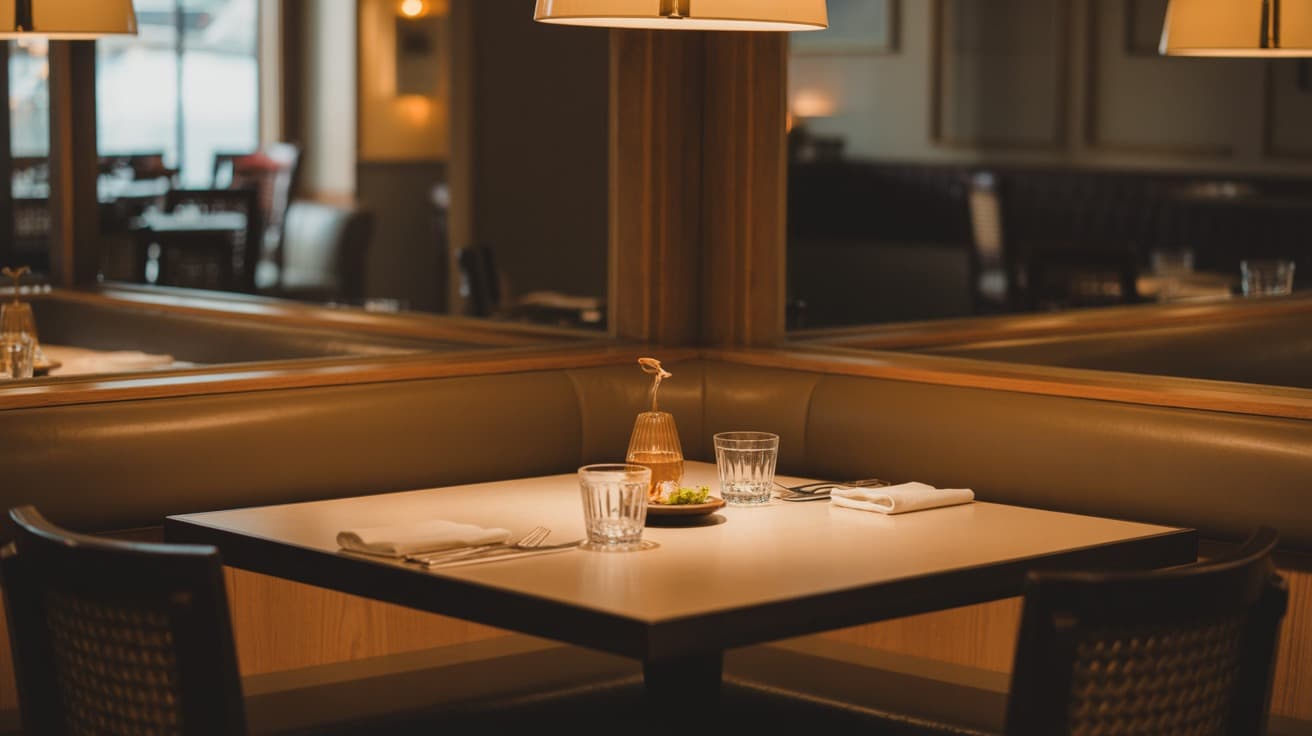
Almost every concept I’ve been handed was designed for one night, and that night is opening night. It’s the version that gets photographed, and it’s the version that sells in the room. Then the doors open, the third visit walks in, and nobody designed anything for that guest. That’s where the money lives, and it’s a completely different problem.
The pitch rewards the wrong visit
A first visit is easy to sell because it’s easy to picture. You can put it on a board, you can shoot it, you can walk someone through it in four minutes. Repeat business doesn’t photograph. It shows up as a number in month nine, long after the concept was approved, so it almost never gets argued about while the design is still soft enough to change. I’ve sat in those approvals on both sides of the table.
The question that killed my own idea
I took a beverage concept I liked into a working session with Claude and asked it to break the thing. The first question back was who the guest is on their third visit. I didn’t have an answer. I had a first visit built down to the glassware, the pour, the unveil, and then a cliff. That question lives in my process now, and it has killed more of my ideas than any investor ever has.
Reveal has a shelf life of exactly two visits
The mechanics of a first visit are surprise and revelation. The guest doesn’t know what’s coming, so nearly anything you do lands. By the third visit they know the trick and they know where the bathroom is. Anything built purely on the reveal is finished by then, and the guest rarely tells you why they stopped coming. It just got boring.
What survives repetition
Three things, in my experience. Craft they missed the first time, which is why depth in the actual cooking still pays: the two-day stock, the lamination you can see in the cross section, the detail a returning guest finally catches and feels smart about. A change they can detect, which means the menu or the room has to visibly move on a rhythm they can learn. And a person on the floor who remembers something true, the twist they take it with, the two-top by the service door they hate.
By visit three the guest’s question has changed. Visit one asks what is this place. Visit three asks what will they have changed since I was here, and that second question is anticipation doing the work. It renews itself every time you answer it.
Build the ending in on day one
Here’s the part operators push back on: some moments should be engineered to end. A cart that runs six weeks and then is gone. A four-seat counter that changes format every season. When the guest knows the thing they loved is temporary, the return visit turns into a check on what replaced it, which is closer to Christmas Eve than to loyalty. Decide that before you open, with the second act already prototyped and rehearsed, because bolting it on later reads exactly like what it is, a promotion.
Personalization has to clear a bar
A system that knows a returning guest and a system that’s performing recognition feel completely different from the guest’s chair. Performing is worse than nothing. A screen that says welcome back by name while every human in the room looks straight past you does more damage than plain anonymous service, because the place has just told the guest what it thinks service is. The bar I use: unless the technology hands a real person one true, specific, useful fact in time to act on it, keep it out of the guest’s sightline and let it work in the back.
Run the operator math past opening month
Designing for the third visit costs more up front and pays later, so it needs a version of the numbers that runs past opening month. Most concept budgets are focused hard on the first eight weeks, because those eight weeks are what gets measured and reported. Fine. Then add the lines that carry the second act.
Price what a change cadence costs per quarter, in prep hours and in the small equipment nobody put in the capital ask. Then look at what repeat cover mix does to average check by month nine, and what a third visit is worth over eighteen months against what the first one cost you to buy. When I ran food and beverage in rooms doing north of $55M, the opening was never the hard part. Month seven always was, and month seven never had a line item.
Take the concept sitting on your desk right now and write one paragraph on what the guest physically sees on visit three. What has moved in front of them, and who on your floor knows their name plus one true thing about them. If that paragraph reads like visit one, you’ve designed a photograph, and Monday is a good morning to open the file and start on the second act.